
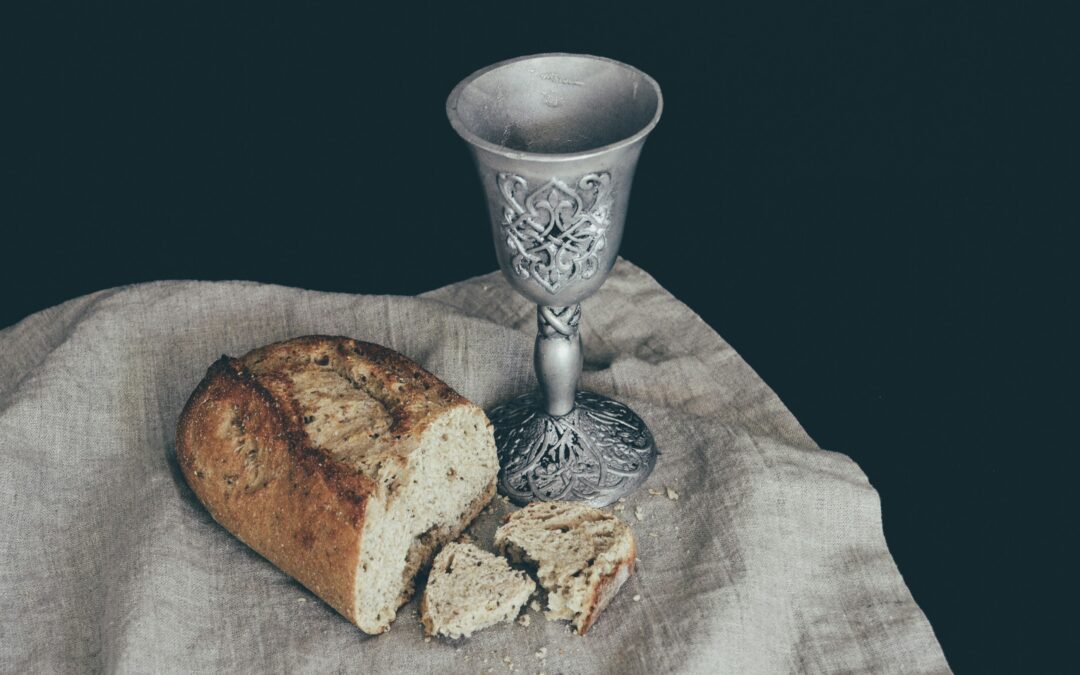
“When he was at the table with them, he took bread, blessed and broke it, and gave it to them. Then their eyes were opened, and they recognized him, and he vanished from their sight. They said to each other, “Were not our hearts burning within us while he was talking to us on the road, while he was opening the scriptures to us?” That same hour they got up and returned to Jerusalem, and they found the eleven and their companions gathered together. They were saying, “The Lord has risen indeed, and he has appeared to Simon!” Then they told what had happened on the road and how he had been made known to them in the breaking of the bread.” -Luke 24:30-35
In April, I joined a panel at Bushnell University to represent the Lutheran understanding and practice of the Lord’s Supper. That same week, our Gospel reading told of the road to Emmaus in Luke 24. Alongside reflecting on the Lord’s Supper, our congregation also shared in a chili cook-off, a newcomers’ brunch, and our monthly Tuesday lunch at Solvang. Truly, meals connect people.
Interestingly, Jesus wasn’t revealed to those two heartbroken disciples on the road to Emmaus but later, at table, when he broke bread with them. In that moment of recognition—quickly followed by his disappearance—their despair turned to burning joy as they rushed back to Jerusalem to share the good news. That blessed bread reoriented everything, opening their eyes to how Jesus had been with them all along. He still reveals himself to his people as we gather, search the Scriptures, break bread, and pray together.
The resurrection appearances remind us that Christ continues to meet his church in the breaking of bread. When Bethesda gathers, it’s a family meal. The Holy Spirit calls and feeds us with Christ’s Word and with the very bread of life in the sacrament of the Lord’s Supper.
At our best, Lutherans simply take Jesus at his word: “This is my body… this is my blood for you.” We don’t over-define how he is present, nor do we reduce the meal to a memorial of an absent Savior. By faith, we receive his promise—Jesus, for the forgiveness of sins—and in receiving him, we are united as one body.
The Lord’s Supper isn’t a spiritual mountain top practiced rarely in order to preserve its specialness. Like riding a donkey into Jerusalem, Jesus comes unassuming, meeting us under the radar in bread and wine. The gift is not in how it makes us feel but in his Word and promise: the new testament in his blood, his inheritance of forgiveness, life and salvation distributed to his people. In this foretaste of the feast to come, we proclaim Jesus’ death until he comes again in glory, when all hunger shall cease.
Shalom,
Pastor Tom